A game art direction study
How to brief a game artist with references
A game artist brief should connect visual references to the asset, camera and constraints of the actual project. Name what must be recognizable, how large it appears on screen and which stylistic decisions are open. References help most when they reduce ambiguity before the first production asset is made.
Artstyle visual analysis of the screenshots below. These references describe appearance, not a verified account of how the original assets were produced.
Explore game art referencesWhat defines this look
Define the deliverable
Describe the asset or scene, intended viewing distance and where it will appear. File formats, dimensions and animation requirements belong in the production brief alongside the visual examples.
Separate fixed and open choices
Identify the non-negotiable constraints and the areas where the artist should propose solutions. A reference can establish proportions without dictating every surface detail.
Request a small first comparison
Use an early sketch or blockout to test the most important decision. Agree on camera and major shapes before polishing texture, ornament or final lighting.
A brief about scale and spacing
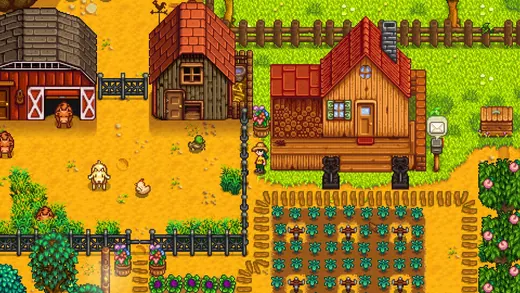
Stardew Valley
Stardew Valley’s compact farm makes buildings, crops and figures readable as separate objects. A brief can borrow that spatial clarity without adopting its exact sprites.
What to studySpecify the object sizes and spacing relationships that matter.
Explore these references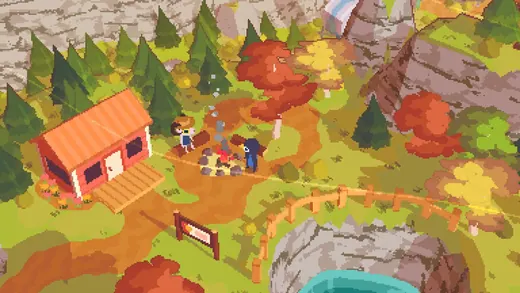
A brief about simplified form
A Short Hike
A Short Hike’s cabin and trees offer another way to organize a small inhabited space. The reference asks a different production question from pixel-art clustering.
What to studySay whether you want the proportions, the geometry or the low-resolution presentation.
Explore these referencesWhat to avoid
“Make it like this” can hide incompatible references and unspoken technical constraints. Avoid treating a screenshot as a license to reuse its characters or assets; describe the decisions you want to learn from.
Should I provide references in different art styles?
Yes, when each has a clear job. A lighting reference can use a different medium from a shape reference. Label the distinction so the artist is not asked to reproduce incompatible styles at once.
Build your reference sheet.
Prepare a one-scene brief with a primary reference, a secondary reference, three required qualities and one open question. Share the lookbook with notes and ask the artist to reflect those qualities in an initial sketch.
Start a free lookbookYour free lookbook includes 20 references and sharing.
Visual analysis by Artstyle. Screenshots belong to their respective rights holders and are provided as references, not licensed production assets. Source links appear with each image.
Related visual studies
Pixel art game references
Compare pixel art in Stardew Valley, Fields of Mistria and Hyper Light Drifter. Explore palettes, object readability and environments for your game lookbook.
Low-poly game environments
Low-poly game environments make shape, proportion and color carry information that a detailed surface might otherwise supply.
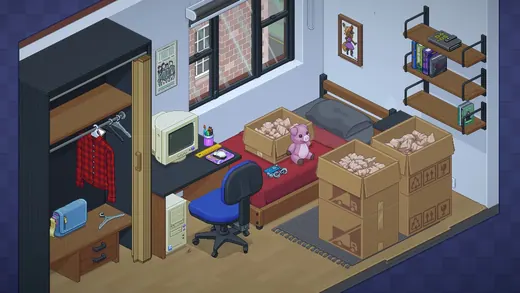
Cozy pixel art interiors
Cozy pixel art interiors feel personal because objects suggest a life, not because every available tile is filled.