A game art direction study
How to build a game art lookbook
A useful game art lookbook explains which decisions each image should inform. Start with your camera, scale and player activity, then collect references for palette, shape, material and interface. The goal is a brief an artist can act on, with clear boundaries around what to borrow from each example.
Artstyle visual analysis of the screenshots below. These references describe appearance, not a verified account of how the original assets were produced.
Explore game art referencesWhat defines this look
Start with the actual scene
Describe what the player does and how close the camera is. A landscape painting and a combat screenshot may be beautiful for different reasons but answer different production questions.
Give each image a job
Label references by purpose: camera, silhouette, palette, surface or UI. One image can serve several jobs, but name them rather than assuming the artist will infer your intent.
Explain differences
A note saying what to leave out is often useful. Distinguish a desired lighting relationship from an unwanted setting, character or amount of detail.
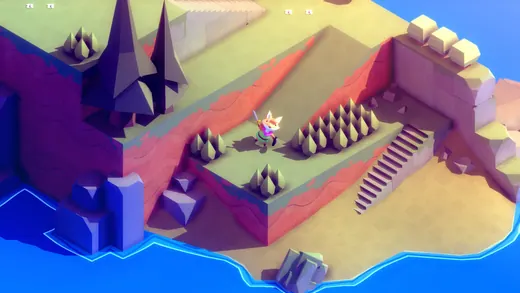
A camera and scale reference
TUNIC
TUNIC’s compact terraces and small fox make a useful reference for an elevated camera and miniature proportions. That does not require borrowing the fox or the fantasy ruins.
What to studyWrite: elevated camera, readable height changes, compact object scale.
Explore these references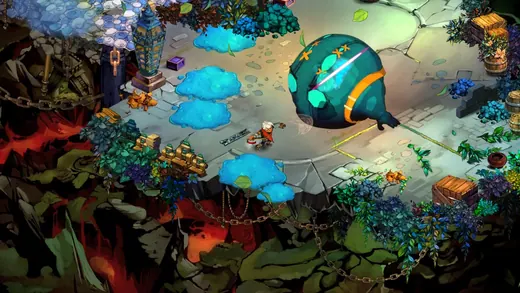
A separate palette reference
Bastion
Bastion’s cool bright color and warm stone can inform a palette even if the game will use a different camera or rendering style. Keep that role explicit.
What to studyWrite: warm structures against cooler environmental color.
Explore these referencesWhat to avoid
A board of fifty unlabeled favorites leaves the main decisions unresolved. Begin with a small selection, remove contradictory references and explain any intentional contrasts.
How many references should an art brief contain?
There is no fixed correct count. Begin with enough to explain the key decisions without repeating the same point. A compact annotated selection is easier to discuss than a large unstructured collection.
Build your reference sheet.
In Artstyle, start a lookbook, save a small set of references and add a note to each. Enable a view link for someone who only needs to review it; use a separate contributor invitation when they should help edit.
Start a free lookbookYour free lookbook includes 20 references and sharing.
Visual analysis by Artstyle. Screenshots belong to their respective rights holders and are provided as references, not licensed production assets. Source links appear with each image.
Related visual studies
Painterly game art
Explore painterly game art in Hades, Bastion and Disco Elysium. Compare screenshots and collect references for illustrated environments and characters.
Miniature and diorama game art
Miniature game art makes a world feel like a small, carefully arranged model.
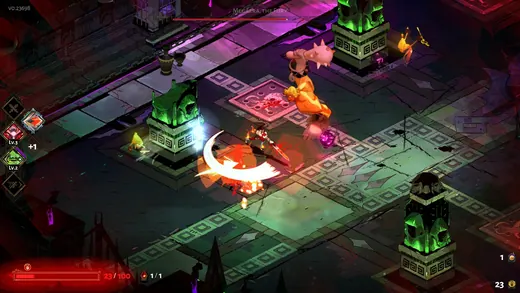
What defines the Hades art style?
Hades combines richly illustrated environments with sharp shapes, strong color separation and emphatic character presentation.