A game art direction study
Minimalist game environment art
Minimalist game environments concentrate meaning into a small number of shapes, colors and spatial relationships. Journey and Manifold Garden demonstrate different approaches: a warm landscape with a clear destination and an architectural field built from repetition. Removing detail makes proportion and composition more important, not less.
Artstyle visual analysis of the screenshots below. These references describe appearance, not a verified account of how the original assets were produced.
Explore minimalist environments referencesWhat defines this look
A few essential forms
Choose which shapes explain the place and remove details that do not help. A recognizable ramp or tower can supply direction without an elaborate surface.
A disciplined palette
Use color relationships to distinguish actor, route and background. A restricted palette can still contain subtle variation; the important constraint is a clear hierarchy.
Scale and repetition
Repeated elements establish distance and rhythm. A deliberate change in size, spacing or orientation can become a destination or point of curiosity.
A clear route through warm space
Journey
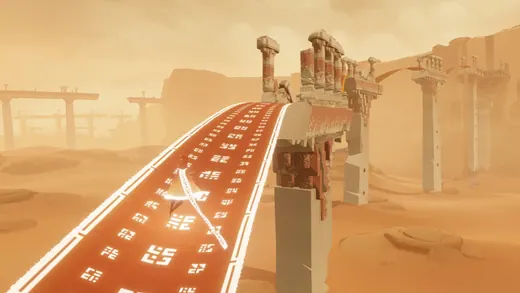
Journey places a tiny red figure on a patterned ramp leading toward pale towers. The broad sand and haze make a few architectural shapes carry the composition.
What to studyFollow the ramp as the scene’s strongest directional form.
Explore these references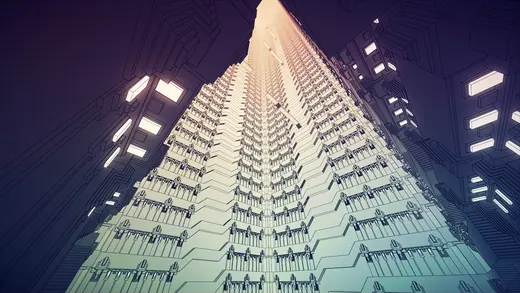
Repetition as the environment
Manifold Garden
Manifold Garden fills the view with repeated white architectural ribs against violet space. The pattern creates depth and complexity without varied surface textures.
What to studyFind which interruption in the pattern attracts attention first.
Explore these referencesWhat to avoid
Minimalism is not an excuse for an unresolved level. With fewer visual signals, confusing proportions or unclear affordances have fewer places to hide.
Can minimalist art still feel large and detailed?
Yes. Repetition, atmosphere and precise proportions can imply immense scale. Detail can exist in the spatial arrangement rather than in surface texture.
Build your reference sheet.
Reduce three references to simple value sketches. Label the actor, the route and the destination, then note the minimum detail needed to distinguish them.
Start a free lookbookYour free lookbook includes 20 references and sharing.
Visual analysis by Artstyle. Screenshots belong to their respective rights holders and are provided as references, not licensed production assets. Source links appear with each image.
Related visual studies
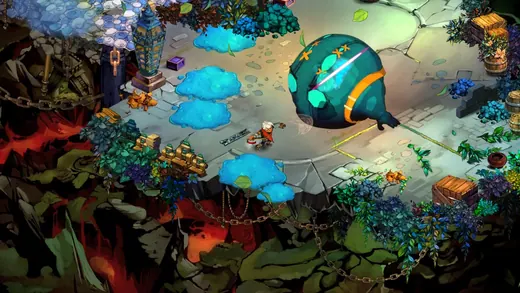
Painterly game art
Explore painterly game art in Hades, Bastion and Disco Elysium. Compare screenshots and collect references for illustrated environments and characters.
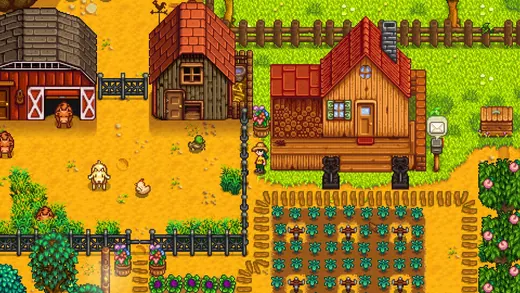
Pixel art game references
Compare pixel art in Stardew Valley, Fields of Mistria and Hyper Light Drifter. Explore palettes, object readability and environments for your game lookbook.

Watercolor game environments
Watercolor game environments use translucent-looking color, irregular edges and areas of visual quiet to suggest pigment on paper.