A game art direction study
Storybook and folklore game art
Storybook game art makes a world feel illustrated through decorative shapes, controlled outlines and a deliberate relationship between figures and scenery. Wytchwood and OKAMI offer different visual references: a dense ornamental forest and bold ink-like marks around action. Folklore is subject matter; the picture-making choices still need to be specified.
Artstyle visual analysis of the screenshots below. These references describe appearance, not a verified account of how the original assets were produced.
Explore storybook illustration referencesWhat defines this look
Ornament with structure
Repeat leaf, branch and architectural motifs to establish a visual rhythm. Keep the playable path quieter so decoration does not hide the route.
Flattened and layered space
A scene can feel like a page while still having depth. Overlap and scale changes can organize space without relying on realistic perspective in every object.
A consistent mark
Choose the character of the contour: crisp, tapered, rough or brush-like. Repeat it across important objects so the scene has a coherent illustrated voice.
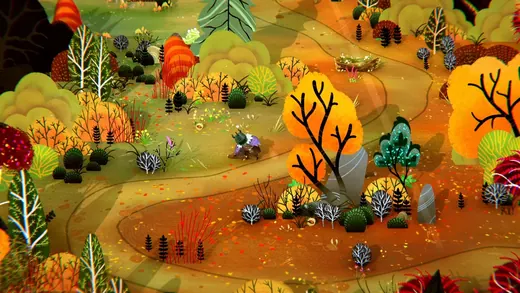
A decorative forest
Wytchwood
Wytchwood fills an orange woodland with patterned plants and sharply outlined objects. The foliage feels ornamental while the ground gives small figures room to move.
What to studySeparate decorative silhouettes from navigable spaces.
Explore these references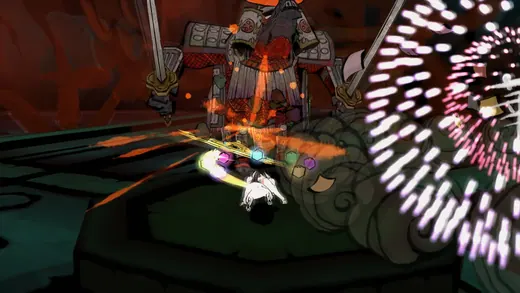
Ink-like action
OKAMI HD
OKAMI surrounds a white wolf with bold contours, petals and brush-like effects. The strong marks supply a different reference from Wytchwood’s fine decorative outlines.
What to studyLook at how effects echo the edges of the scenery.
Explore these referencesWhat to avoid
Do not collapse distinct cultural art traditions into a generic folklore label. Name the visible qualities you are borrowing and research any historical motifs before using them.
Can a 3D game have a storybook aesthetic?
Yes. Camera, contour, color, surface treatment and composition can create an illustrated impression regardless of whether the underlying scene is two- or three-dimensional.
Build your reference sheet.
Choose a contour, a decorative motif and a spatial arrangement. Write one sentence explaining how each supports your own world rather than copying its characters.
Start a free lookbookYour free lookbook includes 20 references and sharing.
Visual analysis by Artstyle. Screenshots belong to their respective rights holders and are provided as references, not licensed production assets. Source links appear with each image.
Related visual studies
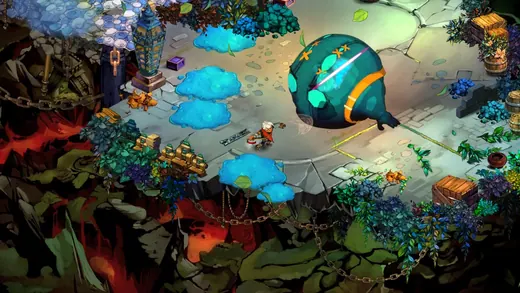
Painterly game art
Explore painterly game art in Hades, Bastion and Disco Elysium. Compare screenshots and collect references for illustrated environments and characters.
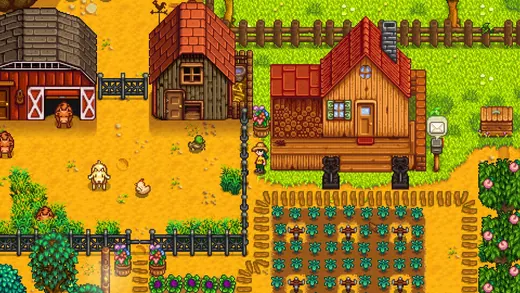
Pixel art game references
Compare pixel art in Stardew Valley, Fields of Mistria and Hyper Light Drifter. Explore palettes, object readability and environments for your game lookbook.

Watercolor game environments
Watercolor game environments use translucent-looking color, irregular edges and areas of visual quiet to suggest pigment on paper.