A game art direction study
Underwater game environment art
Underwater game environments need to communicate depth, suspended space and visibility without the familiar grounding of a horizon or floor. ABZU’s kelp scene and Subnautica’s reef show how plants, light and familiar objects can organize that volume. Treat underwater art as a spatial problem before choosing a blue color grade.
Artstyle visual analysis of the screenshots below. These references describe appearance, not a verified account of how the original assets were produced.
Explore underwater environments referencesWhat defines this look
A readable water column
Use changes in contrast and light to separate nearby forms from distant ones. A scene should suggest a volume of water between objects rather than a transparent room.
Vertical orientation
Plants, surface light and falling or rising forms can help establish up and down. Give the viewer these cues before introducing a complex composition.
Living scale references
A diver, fish or large marine animal provides a familiar measure of size. Their spacing and grouping can make open water feel inhabited without filling it with scenery.
Kelp as a spatial frame
ABZU
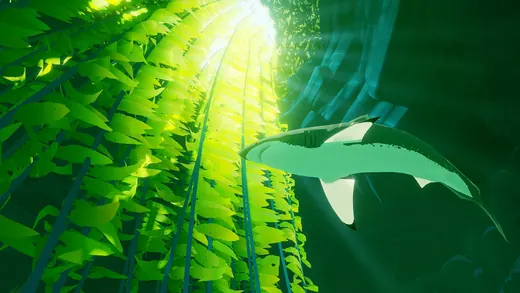
ABZU surrounds a small diver with broad green leaves and pale dolphins. Shafts of light establish an upper direction while overlapping plants give the water depth.
What to studyTrace the light from the upper water into the plant layers.
Explore these references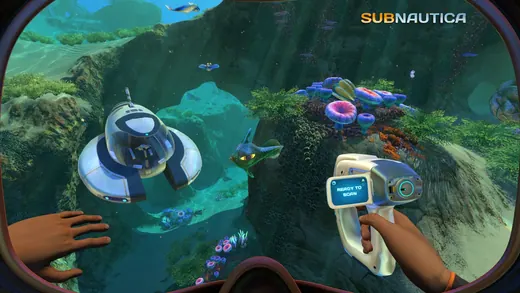
A first-person reef
Subnautica
Subnautica places the diver’s hands and scanner in front of a colorful reef and a small vehicle. Nearby equipment provides scale while the water separates the distant rock surfaces.
What to studyCompare the clarity of the foreground device with the distant reef.
Explore these referencesWhat to avoid
A blue overlay cannot establish underwater space on its own. Overusing haze can also remove the silhouettes needed for navigation. Choose a visibility range and preserve local contrast.
Must underwater environments be blue?
No. Water, depth, lighting and the surrounding plants or materials can lead to green, dark or warm scenes. The reference should explain visibility and lighting rather than prescribe one hue.
Build your reference sheet.
Collect an enclosed underwater area and an open reef. Mark the nearest silhouette, the main swimmer and the most distant visible layer.
Start a free lookbookYour free lookbook includes 20 references and sharing.
Visual analysis by Artstyle. Screenshots belong to their respective rights holders and are provided as references, not licensed production assets. Source links appear with each image.
Related visual studies
Glowing forest game art
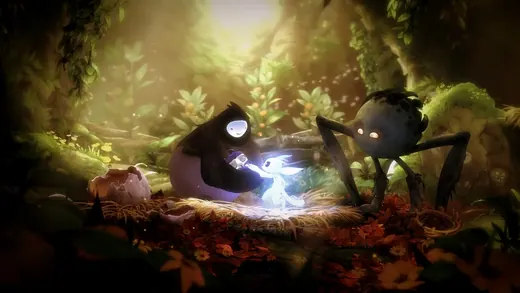
Glowing forest art uses layered organic shapes and selective light to turn vegetation into a navigable atmosphere.
Neon cyberpunk city references
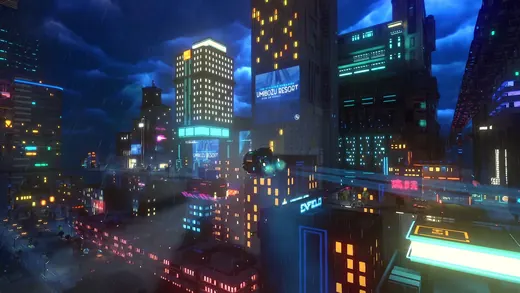
Neon cyberpunk cities depend on the relationship between dark structure and concentrated artificial light.
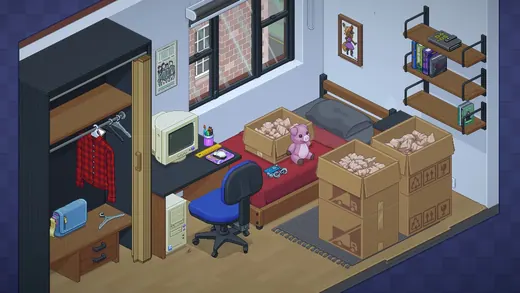
Cozy pixel art interiors
Cozy pixel art interiors feel personal because objects suggest a life, not because every available tile is filled.