A visual guide to tactical sci-fi
Games that look like XCOM
For XCOM 2’s armored soldiers and cinematic military staging, start with Gears Tactics. For its overhead sci-fi battlefields, look at Phoenix Point. For a more weathered, overgrown version of that world, study Mutant Year Zero.
This guide uses Firaxis’s XCOM 2 as its visual starting point. The 1994 X-COM has a different pixel-art language. These are editorial comparisons of appearance; similar combat systems do not necessarily mean a similar look.
Explore XCOM 2 referencesWhat defines this look
Silhouette
Large weapons and distinct armor shapes keep squad members recognizable against detailed scenery.
Camera
Overhead views explain the battlefield; closer, lower angles give individual soldiers dramatic weight.
Light and material
Hard equipment, luminous accents and weathered environments establish a designed sci-fi world.
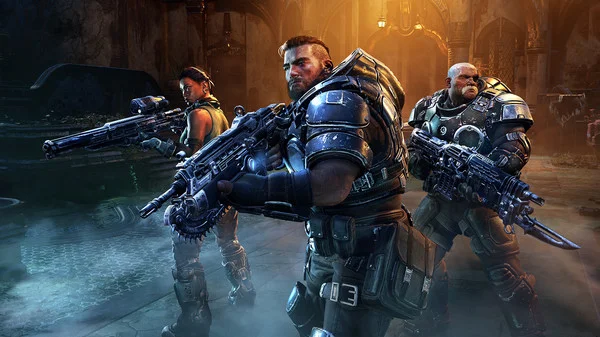
For armor and squad silhouettes
Gears Tactics
Heavy armor, oversized weapons and strongly separated figures make this a useful reference for XCOM’s military character language. Gears pushes the proportions further: broader bodies, heavier equipment and a more muscular silhouette.
What to studyCompare the outline of each soldier before looking at surface detail.
View the publisher’s gallery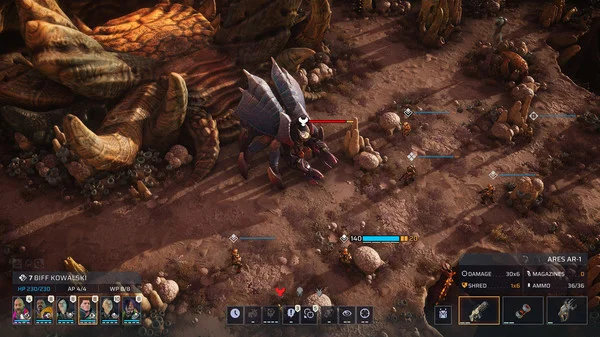
For overhead sci-fi battlefields
Phoenix Point
The angled view, readable units and layered tactical interface are close to the visual problem XCOM solves. The organic growth and alien surfaces take the setting in a more biological direction.
What to studyStudy how the interface separates actionable information from a busy battlefield.
View the publisher’s gallery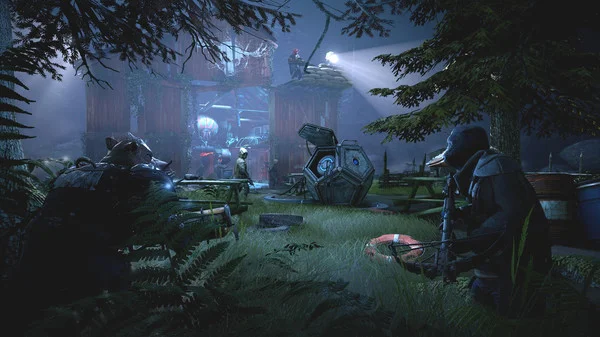
For atmosphere and environmental storytelling
Mutant Year Zero: Road to Eden
Abandoned structures, foliage and pools of light give a tactical setting a worn, inhabited history. Its animal-like protagonists and forest atmosphere distinguish it from XCOM’s cleaner futuristic equipment.
What to studyUse light and framing to keep characters readable inside dense foliage.
View the publisher’s gallery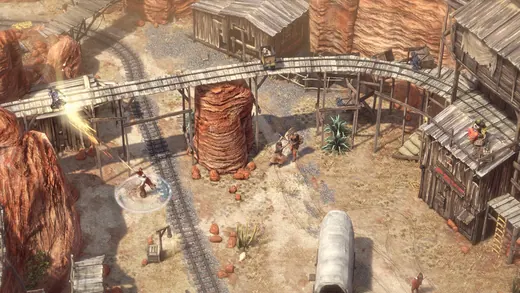
For a different setting with similar spatial problems
Desperados III
Desperados III trades sci-fi for a Western town. Its overhead buildings, pathways and pockets of cover make it useful for studying how to stage an environment for tactical reading.
What to studyBorrow the organization of space without borrowing the setting.
Explore these referencesBuild your reference sheet.
Build a lookbook with three sections: squad silhouettes, battlefield composition and tactical UI. Write one sentence under each reference explaining what you want your artist to take from it. A camera reference and an armor reference do not have to come from the same game.
Start a free lookbookYour free lookbook includes 20 references and sharing.
Visual analysis by Artstyle. Screenshots belong to their respective rights holders and are provided as references, not licensed production assets. Source links appear with each image.
Related visual studies
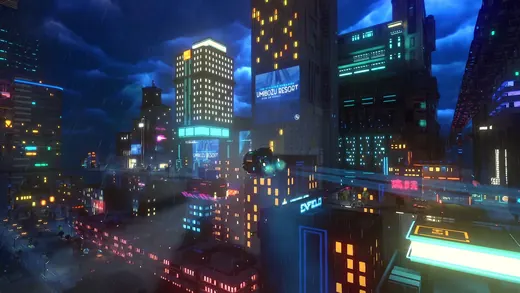
Neon cyberpunk city references
Neon cyberpunk cities depend on the relationship between dark structure and concentrated artificial light.
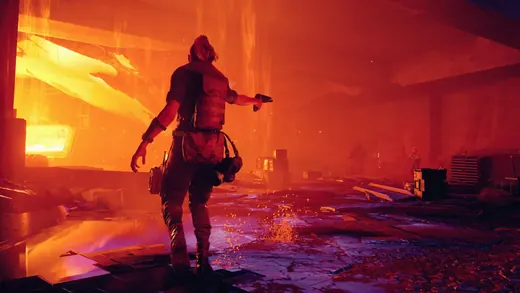
Brutalist game environments
Brutalist game environments draw attention to heavy architectural masses, repeated structural elements and the relationship between a person and an oversized space.
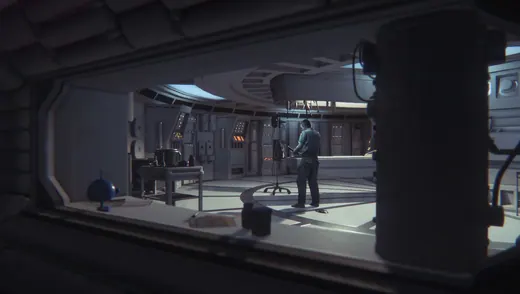
Retro-futuristic spaceship interiors
Retro-futuristic spaceship interiors make advanced technology feel physical through heavy housings, practical lights and surfaces that suggest maintenance.