A game art direction study
Retro-futuristic spaceship interiors
Retro-futuristic spaceship interiors make advanced technology feel physical through heavy housings, practical lights and surfaces that suggest maintenance. Alien: Isolation and Dead Space offer references for enclosed circulation and overwhelming machinery. A convincing brief connects equipment scale to the people who must move through and operate the space.
Artstyle visual analysis of the screenshots below. These references describe appearance, not a verified account of how the original assets were produced.
Explore spaceship corridors referencesWhat defines this look
Equipment has volume
Give consoles, conduits and doors a plausible place in the room. Thick housings and visible access points make technology feel embedded in architecture.
Practical light sources
Identify where illumination appears to come from. A few ceiling fixtures, indicators and openings can make a dark corridor legible without lighting every surface evenly.
Use and maintenance
Wear should follow apparent contact, travel and service areas. Distinguish working surfaces from structural background instead of distributing grime uniformly.
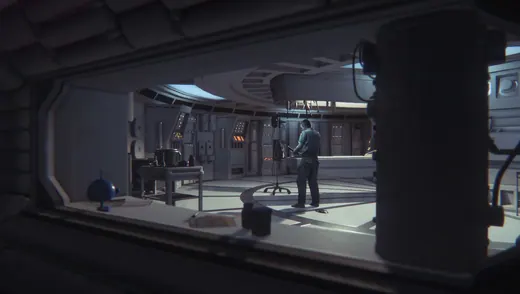
A corridor built from equipment
Alien: Isolation
Alien: Isolation frames a figure with heavy columns, panels and practical lights. The room has enough open circulation to make its industrial density understandable.
What to studyTrace a human route through the equipment.
Explore these references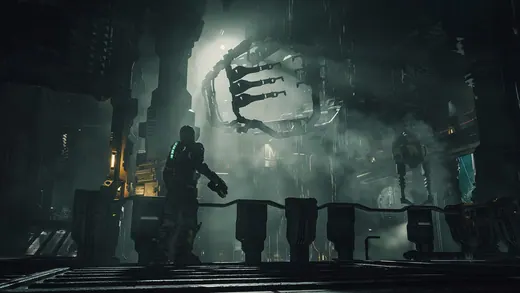
An overpowering machine
Dead Space
Dead Space places a huge circular mechanism in a dark industrial chamber. Repeated ribs and isolated lights communicate a scale much larger than a person.
What to studyCompare the machine’s major rings before looking at small surface detail.
Explore these referencesWhat to avoid
A dark scene filled with arbitrary panels can become visual noise. Establish access, circulation and the main machine’s silhouette before adding cables and surface wear.
What makes retro-futurism different from generic sci-fi?
It uses visual ideas associated with earlier expectations of the future: substantial controls, analog-looking equipment or older material conventions. Specify those qualities rather than relying on the label.
Build your reference sheet.
Collect corridor proportions, door thickness and indicator lighting. Annotate how a person would use each space and which parts should feel old despite their futuristic function.
Start a free lookbookYour free lookbook includes 20 references and sharing.
Visual analysis by Artstyle. Screenshots belong to their respective rights holders and are provided as references, not licensed production assets. Source links appear with each image.
Related visual studies
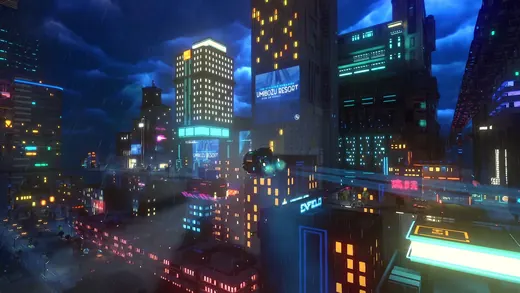
Neon cyberpunk city references
Neon cyberpunk cities depend on the relationship between dark structure and concentrated artificial light.

Brutalist game environments
Brutalist game environments draw attention to heavy architectural masses, repeated structural elements and the relationship between a person and an oversized space.
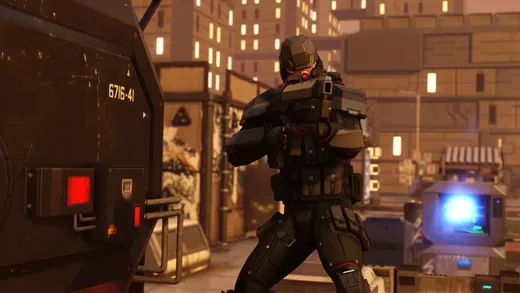
Games that look like XCOM
Compare games that look like XCOM: Gears Tactics, Phoenix Point and Mutant Year Zero. Screenshots, art-direction notes, and references for your own game.